| SPEECHES
Welcome
Address
by
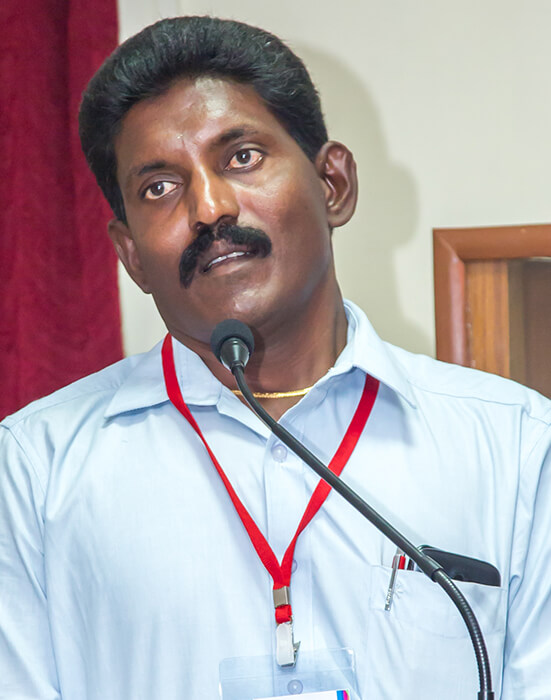
Mr Richard Street
Chief
Executive,
Youth Business International, United Kingdom
At
the Special Plenary Session of
"Thought Leadership Conference"
Date: 30 October 2003
Venue: Balayogi Hall, Parliament Library Building,
Parliament House, New Delhi
Youth
Business International is something that HRH Prince of Wales started
about 4 years ago. We have 3 other founders here in the hall.
Lakshmi, Robert Davis myself were all present with the Prince. The
prince’s idea was how do we get this example of public private
partnership. We have already developed in India, and UK and one or
two other commonwealth countries. How do we make it available to all
other countries in the world. And that why YBI has come from and one
of our major partners is BYST.
Why
do young people become entrepreneurs, how do young people become
entrepreneurs, it’s a question that lot of panellists have been

asking. Let’s go to some of the facts. Where do entrepreneurs
normally start, how do they start? There is a very, very good
research done by a college of London business school, called The
Global Entrepreneurship Monitor. They visited about 37 countries and
about 250 million start-ups have been looked up and surveyed during

the last 7 years by the survey. India comes very, very high as one
of the most entrepreneurial countries in the world with 35. I am
afraid to say UK comes out the low. But the point that I want to
concentrate on is the figure I have put in yellow - 85% of all


start-ups are started with the help of family & friends,
informal help. It is not done by the banks. Venture capital was
provided only one in ten thousand for start- ups. What YBI programs
try to do is to help the business communities to replicate what
families and friends do for young people, for those young people who
cannot get help because their families are poor, because their
friends don’t work in businesses and know nothing about business
or who have become detached from their family, they are no longer
living at home. This is where the private- public partnership comes
in so strongly, replicating with what family and friends do for
young people who are coming from disadvantaged background.
I
will show where the public-partnership comes. If a young person
wants to go to make a successful business, first of all they start
with the public sector in the curriculum that’s help - skills
training - They help with career’s advice. Many countries they
help with business planning. Then goes on to banks, micro credit and
enterprise support is provided very often from the public sector.
Private sector also provides this, but this is predominantly public
sector. For young people to move from the left to the right, if they
have got no experience, no assets they find an impassable war. They
can't get cross that war because the skills training, the people
whoa re teaching can't help them during the first few years of
entrepreneur just as the family and friends would help them. These
are professionals in training not in sustaining people through
entrepreneurship.
Also
the banks, not because of greed or because of any inherent
anti-social, banks cannot afford to go right back and help people
through this very high risk area when they are just starting up a
business. And that’s where the YBI programs come in. That’s
where this public-private partnership comes in. It’s in providing
mentoring, its providing access to seed funds to these young people.
We have a fantastic example here in India where you have Escorts,
Toyota, Bajaj Motors, CII - these are large corporations helping
provide the strategy for creating this public private partnership.
You have the many, many mentors, it must be over 1000 mentors now
working for BYST, these are private people giving their experience
and knowledge to these young people. The perfect partnership between
the public and the private.
On the left you
have countries many of whom are representatives here today, who have
worked in accredited models of this public private partnership.
Another lot of companies are coming along seeking accreditation. We
have lot of countries who within which we have had discussions. This
is the range of countries, this is the developed world, developing
world it’s a huge variety of places who are picking up this idea.
Today I am delighted that we are celebrating the opening of Asian
Centre of Excellence, its quite right that His royal highness should
be here because it is his invention, its his child, it is the work
experience with BYST they have developed in this area that is so
valuable for us to be able to take it to the rest of Asia.
Thank
you.
Top
|